
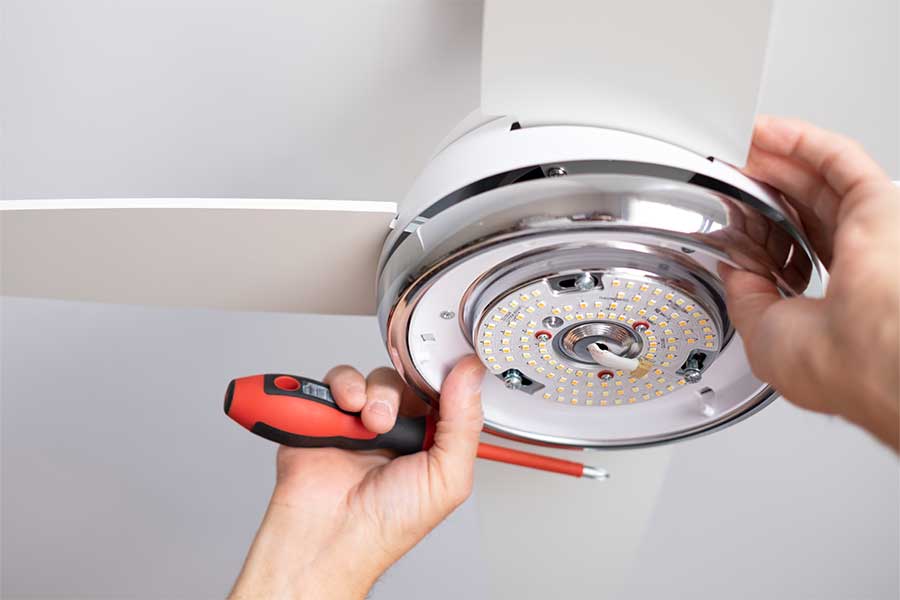
Weatherford summers are relentless. From late May through September, temperatures along the US-180 corridor regularly push into triple digits, and air conditioning systems run nearly around the clock to keep homes comfortable. One of the most practical and cost-effective ways to reduce the burden on your AC is also among the most overlooked: ceiling fans.
Properly installed and used, ceiling fans allow homeowners to raise the thermostat setpoint without sacrificing comfort, which translates directly into lower energy bills and less wear on cooling equipment. Our ceiling fan installation service helps Weatherford homeowners get the most out of this combination, and understanding how it works makes the value clear.
How Ceiling Fans Work With Your AC System
Ceiling fans do not actually lower the air temperature in a room. What they do is create a wind chill effect that makes occupants feel cooler by accelerating the evaporation of moisture from the skin. That perceived temperature difference, typically between two and four degrees, is meaningful enough that most households can raise their thermostat setting by a comparable amount without noticing any reduction in comfort.
For an AC system working hard through a Weatherford summer, that thermostat adjustment matters. Running at a higher setpoint means fewer, shorter cooling cycles, which reduce energy consumption and ease mechanical stress on compressor components. Over a full cooling season, the cumulative effect on both energy bills and equipment longevity is significant.
Ceiling fans also help address one of the most common comfort complaints in larger homes: uneven temperature distribution. Cool air from the AC tends to settle near the floor while warmer air pools at the ceiling. A ceiling fan set to rotate counterclockwise in summer pushes that cooled air downward and keeps it moving throughout the space, creating more consistent temperatures from room to room.
Benefits of Ceiling Fans During Hot Weather
Working in homes across Weatherford and Parker County, the consistent difference that well-placed ceiling fans make during the peak summer months is evident. The practical benefits include:
- Reduced energy consumption: Raising the thermostat two to four degrees while maintaining the same comfort level produces measurable savings on monthly utility bills, particularly during the extended cooling season this region experiences.
- Less strain on the AC system: Fewer and shorter run cycles mean less wear on the compressor, fan motor, and other mechanical components. This contributes to longer equipment life and fewer mid-season repair calls.
- More even cooling throughout the home: Circulating air reduces hot spots and helps the AC system maintain its set temperature more consistently across all rooms.
- Year-round value: Reversing the fan to clockwise rotation in winter circulates warm air that collects near the ceiling back down into the living space, reducing heating load as well.
Pairing ceiling fans with a properly maintained AC system compounds these benefits. Scheduling AC maintenance before the cooling season ensures the system is operating at rated efficiency before the heat arrives.
Choosing the Right Ceiling Fan for Your Home
Fan selection affects both performance and how well the unit complements the space where it is installed. The key factors a technician will consider during a consultation include:
Room size and ceiling height: The fan diameter should be matched to the room’s square footage. Undersized fans in large rooms do not move enough air to be effective, while oversized fans in small rooms can create uncomfortable drafts. A standard mounting height of at least 7 feet from the floor to the blade is a baseline for effective and safe operation.
Motor quality and energy efficiency: Higher-quality motors move more air per watt of electricity consumed. Energy Star-rated models are a reliable benchmark for efficiency and typically carry better warranties than standard options.
Style and finish: Ceiling fans are a visible fixture in any room. The right selection in terms of blade finish, housing design, and lighting option should complement the existing decor rather than compete with it.
Features: Remote controls, wall controls, and smart home compatibility vary across product lines. The right combination of features depends on where the fan is installed and how the household prefers to manage it.
Professional Installation for Maximum Efficiency
The performance a ceiling fan delivers depends significantly on how it is installed. A fan that is mounted at the wrong height, positioned off-center in the room, or wired incorrectly will underperform regardless of its specifications on paper.
Common installation factors that affect efficiency and safety include:
- Mounting height: Blades should be no lower than 7 feet from the floor and ideally between 8 and 9 feet for optimal air movement in standard rooms.
- Centering: A fan positioned in the center of the room distributes airflow evenly. Off-center placement creates uneven circulation that limits the cooling effect.
- Blade balance: An improperly balanced fan wobbles, creates noise, and wastes energy through vibration. Proper installation includes verifying the balance before the job is complete.
- Electrical connections: Ceiling fan wiring must be connected to a circuit rated for the load, with correct polarity and grounding. Homes with older wiring or panels that do not meet current standards may require an electrical assessment before installation can proceed safely.
Our residential electrician team handles both the electrical assessment and the installation in a single visit, ensuring the fan is wired correctly and the supporting circuit is appropriate for the application.
Maintaining Your Ceiling Fan for Ongoing Performance
A ceiling fan requires minimal maintenance compared to most home systems, but a few routine practices keep it running quietly and efficiently for years.
Dust accumulation on fan blades is the most common maintenance item. Heavy dust buildup unevenly adds weight to the blades, which can cause wobbling and put additional load on the motor. Cleaning blades periodically, particularly before the start of the cooling season, takes only a few minutes and preserves both performance and balance.
Periodically checking for loose hardware is also worthwhile. Vibration over time can cause mounting screws and blade brackets to loosen slightly, which leads to noise and wobble. Tightening these as needed keeps the fan running smoothly.
Reversing fan direction seasonally is an often-overlooked step. Counterclockwise rotation in summer creates the downward airflow that produces the cooling effect. Clockwise rotation at low speed in winter gently pushes warm air down from the ceiling without creating a draft. Most fans include a small direction switch on the motor housing, and making this adjustment each season takes seconds.
For persistent wobbling, unusual sounds, or any electrical concerns, professional service is the appropriate next step rather than attempting to diagnose wiring or motor issues without the proper training and tools.
Getting the Most From Your Cooling System This Summer
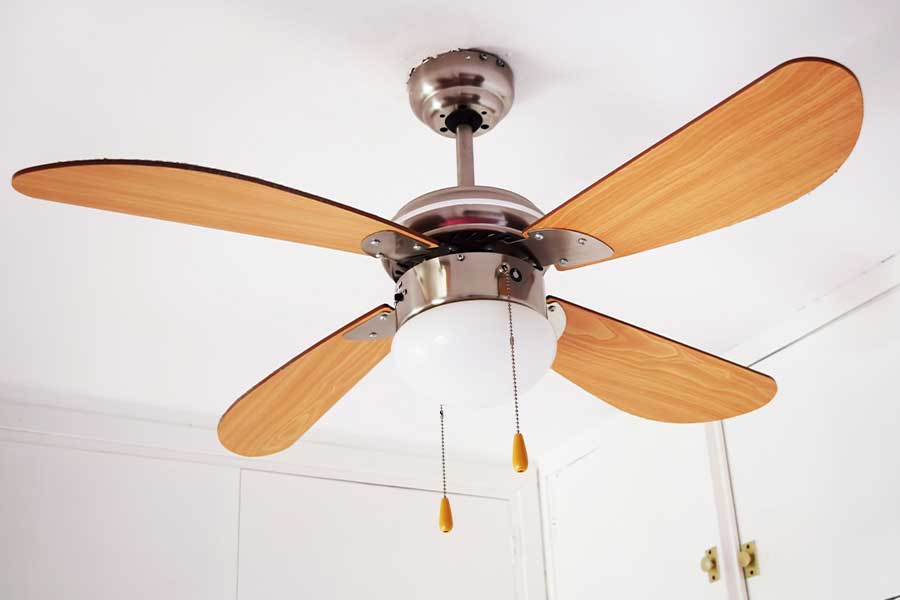
Ceiling fans are a straightforward, proven way to improve your AC system’s performance and reduce your energy costs to stay comfortable through a Weatherford summer. The combination of proper fan selection, professional installation, and consistent maintenance delivers real returns in both comfort and energy costs.
At Hart HVAC and Electric, our team helps homeowners throughout Weatherford and Parker County find the right combination. From installation to electrical assessment to seasonal AC service, we handle the full picture of residential comfort with honest pricing and quality workmanship.
To get your fans installed before the peak of summer heat, contact our team today and schedule your installation.