
AC Repair in Houston, TX
- Honest Service
- Locally Operated
- Quality Workmanship
- Honest Service
- Locally Operated
- Quality Workmanship
Houston does not ease into summer. The heat arrives early, the humidity never really leaves, and by June most air conditioners are working harder than they were ever designed to. When yours starts struggling, Hart HVAC and Electric is ready to help fast.
We are a veteran-led, family-owned home services company built on honest work and real accountability. Our certified technicians understand the specific demands that Houston’s climate puts on residential AC systems, and we show up prepared to diagnose the problem correctly and fix it right the first time.
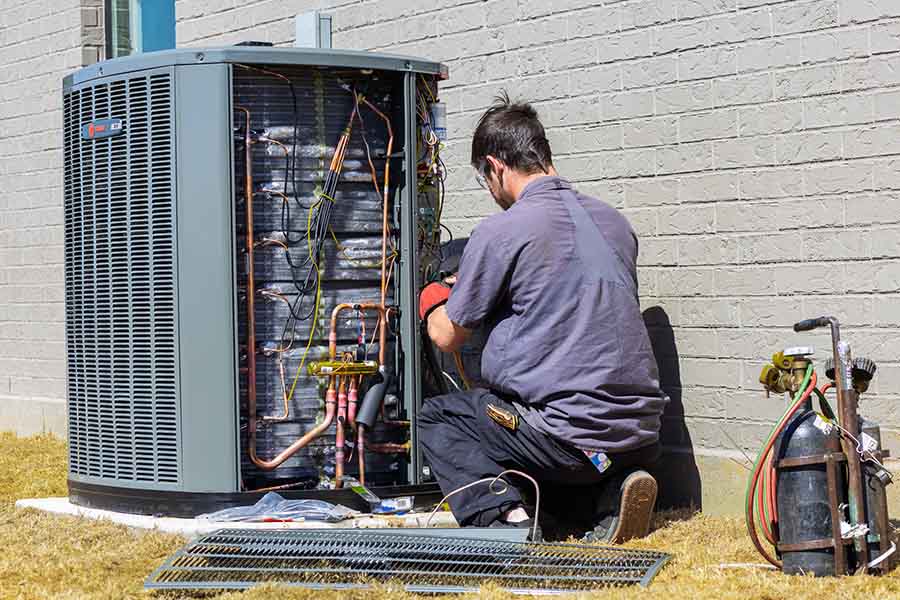
Houston homes run the full spectrum of AC equipment — from older window units in Midtown bungalows to multi-zone systems in newer Memorial-area construction — and our technicians are trained to work on all of it. We handle central air conditioners, heat pumps, and ductless mini-split systems across every major equipment type and age range.
Every service call starts with a full system inspection. We look beyond the obvious symptom to check refrigerant charge, electrical components, evaporator and condenser coils, thermostat calibration, and airflow through the ductwork. Houston’s humidity means moisture-related problems are common, so we also check for drainage issues, frozen coils, and signs that your system is oversaturated and struggling to dehumidify properly.
Before any repair work begins, we give you a clear explanation of what is wrong and exactly what it will cost to fix it. No pressure, no guesswork — just straight answers from a team that treats your home with respect.
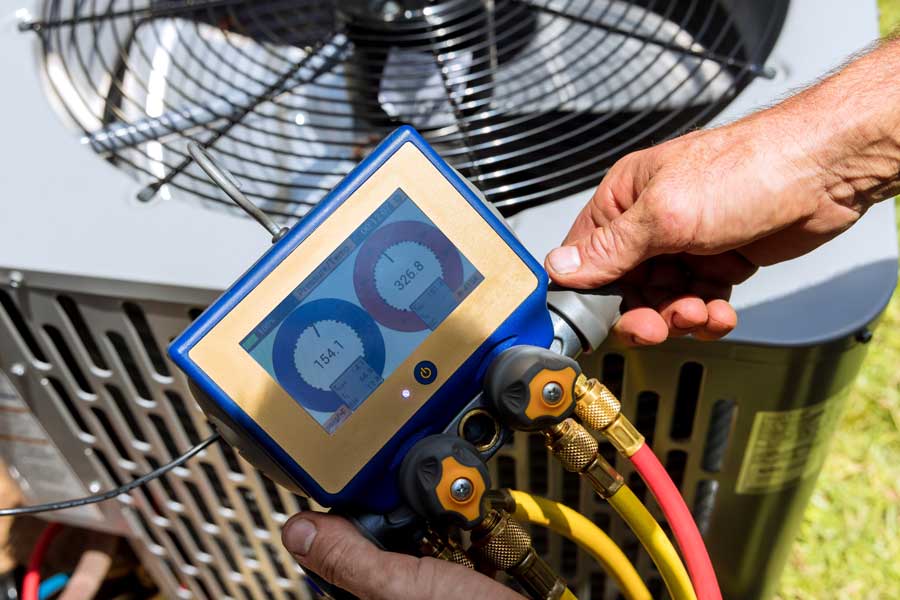
In Houston’s climate, a struggling AC can go from a minor issue to a full breakdown fast. Watch for these warning signs.
Houston summers leave very little margin for a system that is already on the edge. If something feels off, it is worth getting it checked before the next heat wave hits.
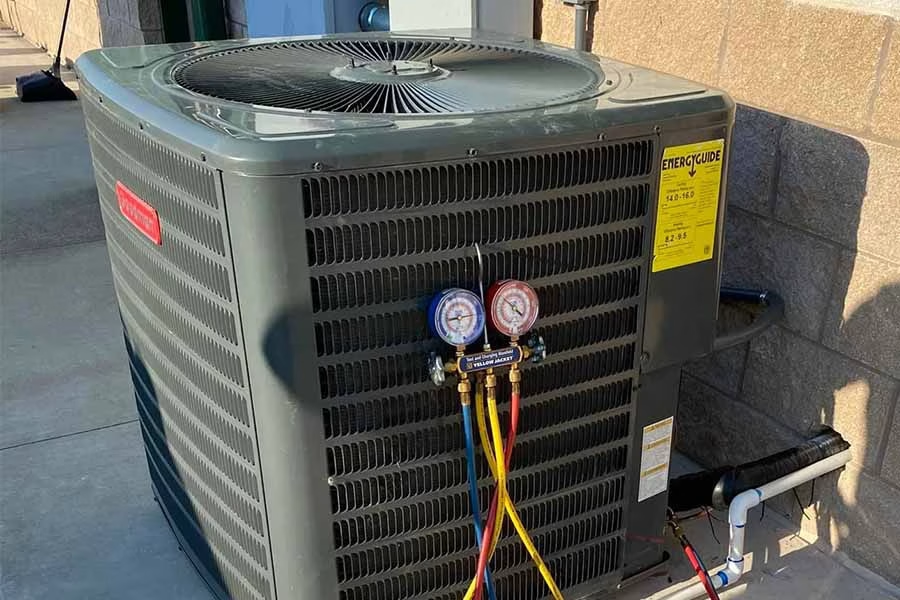
Houston sits in one of the most demanding climate zones in the country for residential HVAC. The combination of extreme heat and near-constant humidity means air conditioners here log more run hours per year than systems in almost any other major U.S. city. That relentless workload wears out components faster and makes deferred maintenance far more costly.
The city’s flat coastal geography contributes to poor air drainage, which keeps humidity levels elevated even overnight. This means AC systems rarely get a true rest cycle, and components like blower motors, capacitors, and compressors age quickly. Homes in older Houston neighborhoods — including parts of the Heights, Montrose, and the East End built in the mid-20th century — often have ductwork that was sized for less efficient equipment, which creates airflow problems that compound over time.
Flooding and storm events are also a real factor. Houston’s history with heavy rainfall means condenser units are frequently exposed to standing water, and post-storm electrical surges can damage control boards and contactors. A system that seemed fine before a storm may show problems days or weeks later as that damage works its way through the components.

Earlier this summer, we got a call from Marcus, a homeowner in the Houston Heights whose two-story house had stopped cooling the upstairs rooms entirely. The downstairs felt fine, but the bedrooms were sitting at 83 degrees by mid-afternoon, and his family had been sleeping with fans pointed at them for three nights before he called us.
When our technician arrived, the system appeared to be running normally from the outside. But a closer look at the ductwork revealed that a flex duct connection serving the upstairs supply had partially collapsed — a common issue in older Heights homes where ductwork runs through unconditioned attic space and takes years of heat stress. On top of that, the evaporator coil was showing early signs of ice buildup from restricted airflow.
We resealed and supported the collapsed duct run, cleared the airflow restriction, and let the coil thaw fully before doing a final check of the refrigerant charge. By the time we packed up, the upstairs was already dropping. Marcus said he had assumed it was going to be a compressor problem and braced for a big bill. Turned out the fix was straightforward — it just needed someone to look in the right place.
There is no shortage of HVAC companies in Houston. Here is what makes us different.
We offer same-day service for most repair calls and 24/7 emergency availability for situations that cannot wait. Houston summers make a broken AC a genuine emergency, and we treat it that way.
There is no one-size-fits-all answer, but a good rule of thumb is to weigh the repair cost against the age and condition of the system. If your unit is more than 12 to 15 years old and the repair runs more than a third of replacement cost, a new system often makes more financial sense. We will walk you through the numbers honestly so you can decide what is right for your home.
This is a common complaint in Houston and usually means your system is not removing moisture from the air efficiently. It can be caused by an oversized unit that short-cycles, a refrigerant issue, a dirty evaporator coil, or a clogged condensate drain. A technician can pinpoint the cause quickly and get your system dehumidifying properly again.
Yes. Electrical surges from lightning or grid fluctuations can damage your system’s control board, capacitors, and contactor. Houston’s severe storm seasons make this a real risk. If your AC stopped working after a storm or outage, it is worth having a technician inspect the electrical components even if the system appears to start normally.
At minimum, once a year before cooling season begins. Given how hard Houston systems run — often eight to ten months out of the year — twice-yearly maintenance is a smart investment. Regular tune-ups catch small problems before they become expensive breakdowns and help your system run more efficiently through the long cooling season.
